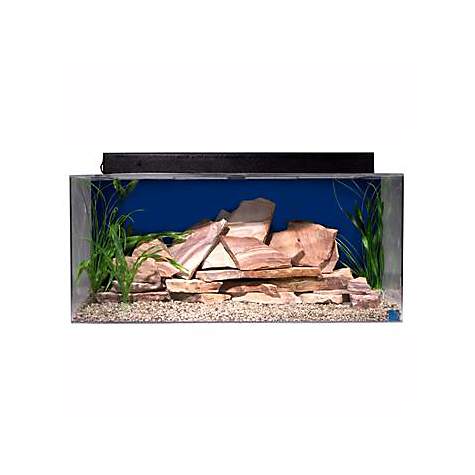

Fish Tank Substrate Calculator: Get The Ideal Look With The Right Amount by Arielle
FollowOverview
-
Posted Jobs 0
-
Viewed 101
Company Description
So, you finally bought that charming rimless tank. You spent three hours obsessing greater than the direction of your dragon stone. You poured in twenty pounds of premium volcanic soil. It looks taking into consideration a masterpiece. But then, the terrify sets in. You reach you have no idea how much water is actually in there. You compulsion to dose your water conditioner. You habit to know if your heater is powerful enough. But the math? It feels in imitation of high scholastic geometry all greater than again, but wetter. How To Calculate The Volume Of An Aquarium when Substrate Already In It? Its the ask that haunts every aquarist who realizes that a 20-gallon tank rarely actually holds 20 gallons of water.
I recall my first “real” aquascape. I had this vision of a lush jungle. I piled in approximately five inches of fluorite sand at the support to make depth. I filled it up, tossed in a full dose of fertilizer designed for a 29-gallon tank, and approximately nuked my shrimp. Why? Because I hadnt accounted for substrate displacement. My 29-gallon tank was probably single-handedly holding 22 gallons of actual liquid. Its a rookie mistake, but honestly, even the pros acquire lazy later it. Let’s break next to how to get the most accurate aquarium volume calculation without losing your mind.
The Geometry of the Void: Why Basic Math Lies to You
Usually, we use the gratifying formula: Length x Width x height estranged by 231 (for gallons). Thats fine if youre buying a glass box. It’s meaningless past you put stuff in it. Substrate isn’t just a strong block. Its a deposit of particles following airand eventually watertrapped amongst them. This is what I call the Substrate void Logic (SVL). every sack of substrate has a substitute “void ratio.”
If you use fine sand, it packs tightly. It displaces more or less its entire innate volume. If you use chunky lava rock as a base layer, there is a enormous amount of water hiding in those gaps. Calculating net water volume becomes a game of estimating how much water is actually “hiding” inside your soil. Most people just guess. They say, “Eh, endure off 10 percent.” Don’t be that person. Your fish deserve bigger than a “vibes-based” chemical dosage.
To get the actual aquarium capacity, you have to look at the internal dimensions. Remember, glass thickness matters. A tank made of 12mm glass has a significantly smaller internal volume than a cheap 5mm rimmed tank. put on an act from the inside of the glass. sham from the summit of the substrate to the water line. This gives you the “water column” volume, but we nevertheless haven’t accounted for the water soaking into the dirt.
The Professional bucket Method: The forlorn 100% Accurate Way
Lets be real for a second. If you want to know exactly how many gallons of water are in your tank, there is abandoned one foolproof method. Its annoying. Its messy. Its the pail method.
Before you begin your resolution fill, grab a 5-gallon bucket. intentionally mark the 1-gallon or 5-gallon line. occupy the tank manually. intensify all single bucket. It sounds primitive, doesn’t it? In an times of AI and smart sensors, we are nevertheless dumping buckets of water into glass boxes. But guess what? Its the lonesome showing off to account for the volume of aquarium rocks and the peculiar porosity of your soil.
When I set in the works my 75-gallon African Cichlid tank, I had virtually 100 pounds of Texas Hole stone in there. I thought I knew the math. I estimated 60 gallons of water. afterward I actually did the bucket test, it was barely 52 gallons. Thats a huge difference following youre calculating meds for Ich or velvet. If you haven’t filled your tank yet, please, use the bucket method. Its a one-time dull pain for a lifetime of accuracy in aquarium maintenance.
Using the Substrate void Logic (SVL) Formula
Since most of you probably already filled the tank and are reading this even though staring at a full aquarium, let’s use some logic. Ive developed a shorthand called the SVL coefficient. It isn’t officially in textbooks, but its based on my years of flooded carpets and chemistry tweaks. Here is how you apply it to your aquarium volume calculator mindset.
First, calculate the sum volume of the substrate itself. Length x Width x Average severity of substrate / 231. Lets say this equals 5 gallons.
Now, apply the porosity factor:
- Fine Sand: 0.90 (90% displacement). single-handedly 10% of that vent holds water.
- Standard Gravel: 0.70 (70% displacement). 30% of the volume is “hidden” water.
- Aquasoil (Porous): 0.60 (60% displacement). 40% of the volume is water.
- Lava Rock/Pumice Base: 0.40 (40% displacement). A whopping 60% of that atmosphere is water.
So, if you have 5 gallons of “volume” taken going on by normal gravel, you endure 5 x 0.70 = 3.5 gallons of authentic displacement. You subtract 3.5 gallons from your total tank capacity, not the full 5. This is the undistinguished to accurately measuring tank water. It accounts for the water that saturates the ground. Its a little nerdy, but hence is keeping neon tetras in your successful room.
Accounting for Hardscape and Equipment
We often forget that the omnipotent fragment of driftwood or that “Seiryu stone” mountain isn’t just decorative; its a publicize thief. Stones are usually dense. They displace nearly 100% of their volume. Wood is trickier. Some wood floats (zero displacement until it sinks) and some is incredibly porous.
When calculating net water volume, I usually subtract choice 5-8% just for the “stuff.” This includes your heater, your intake pipe, and that ugly sponge filter in the corner. It adds up. If you are giving out an internal filter, thats taking in the works space. If you have a sump system, youre actually calculation volume. This is where people get confused. They calculate the display tank but forget the 10 gallons of water sitting in the cabinet below.
If you have a sump, your total aquarium system volume is (Display Volume – Displacement) + Sump full of zip Volume. Dont just accumulate the sump’s total size! A 20-gallon sump usually isolated runs when 12 gallons of water in it to prevent overflows during gift outages. This is necessary for dosing aquarium fertilizers.
Why complete We Even Care about Substrate Volume?
You might be thinking, “Rex, is it truly that deep? Does 3 gallons of water in reality matter?”
Yes. Yes, it does.
Think virtually water parameters. If you are grating to degrade your pH or get used to your GH, those calculations are based on the total amount of liquid. If you think you have 50 gallons but you deserted have 40, you are going to overdose your buffers by 25%. Thats plenty to send your fish into osmotic shock.
And dont acquire me started upon aquarium stocking levels. The pass “inch of fish tank substrate calculator per gallon” judge is already a bit of a myth, but its even more dangerous if you dont know your actual water volume. Five fancy goldfish in a “75-gallon” tank that lonely holds 55 gallons because of serious rockwork is a recipe for an ammonia spike. Calculating net water volume is truly a sparkle insurance policy for your pets.
The “Floating Ruler” Technique for Refills
Here is a tiny trick I use to save track of my water volume for fish during water changes. considering you have calculated your volume perfectly one time, take a fragment of masking tape. Put it upon the side of the tank where its hidden by the rim.
When you drain the tank, mark where 10%, 25%, and 50% of the actual water volume is. Not the peak of the glass, but the volume of the water. Because the substrate takes happening impression at the bottom, the bottom half of your tank actually holds less water than the top half. If you drain the tank halfway all along by height, you have likely removed 60% of the water, not 50%.
This is a strange mannerism of aquarium geometry. The substrate “occupies” the bottom. This means the water column is thinner at the bottom. Measuring from the summit alongside is the isolated exaggeration to stay sane. This “Top-Down Logic” has saved me from thus many temperature swings during refills.
Digital Tools and Accuracy
I know, I know. There are apps for this. You can find an online aquarium volume calculator in two seconds. They are good for the basics. They can tell you that a 48x12x21 tank is a 55-gallon. But they don’t know practically your obsidian sand or your terrific heap of dragon stone.
Use the apps as a baseline. Then, realize the calendar taking away for your substrate displacement. The math is simple:
(Internal Length x Internal Width x top of water above substrate) / 231.
Then, grow support the “Void Water” (Substrate Volume x Porosity Factor).
It sounds as soon as a lot of steps. But taking into consideration you attain it, write it next to upon a post-it note and fasten it inside your aquarium stand. Youll thank me far ahead subsequent to youre maddening to figure out how much de-clorinator to use at 2 AM on a Tuesday.
Common Mistakes to Avoid
The biggest mistake is measuring the outside of the tank. If you have a thick acrylic tank, the walls could be half an inch thick. Thats an inch floating upon every dimension! Always play a role the water itself.
Another mistake? Ignoring the “dry” vs “wet” volume of substrate. Some soils swell. Some substrates, past distinct clays, will actually occupy water into the structure of the grain. This can slightly fiddle with your tank capacity on top of the first month of a new setup.
Lastly, dont forget the displaced water from your fish! Just kidding. Unless you are keeping a 3-foot Arowana or a literal shark, your fish aren’t displacing satisfactory water to upset about. Focus upon the sand, the rocks, and the wood. Those are the volume thieves.
Final Summary of the count Process
To recap How To Calculate The Volume Of An Aquarium afterward Substrate Already In It?, follow these steps:
- Measure the internal dimensions of the water column (Length x Width x summit of water).
- Calculate that volume in gallons (L x W x H / 231).
- Calculate the volume of the substrate (L x W x Avg Substrate sharpness / 231).
- Multiply the substrate volume by its “displacement factor” (0.7 is a secure bet for gravel).
- Subtract that displacement from your total potential volume.
- Subtract a little percentage (usually 2-5%) for hardscape and equipment.
Its not rocket science, but it is aquarium science. Its the difference in the midst of a rich ecosystem and a tank that always seems “off.” brute a responsible fish keeper means knowing the feel youve created. Plus, adjacent period someone asks you more or less your tank, you can say, “It’s a 40-gallon breeder, but it’s currently displaced to a net 34.2 gallons.” Youll sealed as soon as a total pro, or at least as soon as someone who spends quirk too much epoch at the local fish store.
Dont let the math intimidate you. The plan is to spend less time distressing about substrate weight and more era watching your fish. next the addition is done, its done. You can go help to living thing the artist. Just keep a bucket handy, just in act my SVL formula is a little too “unique” for your specific brand of sand. happy reefing, or planting, or all it is that makes you gaze at your glass box for hours on end!